


Contact Orizon Energy
solar energy: beneficial for Your home, the planet, and your wallet.


Net Billing Basics
Net Billing is how homeowners with solar get paid for excess energy produced. It's a system used in Alberta to credit you for the unused solar energy you export to the grid.
You're not storing energy, you're trading with the grid. Instead of storing unused power, you export it to the grid and receive credits you can use later.
Your utility company tracks what you use and what you export. A bi-directional meter measures electricity flowing in both directions, both into and out of your home.
Your credits help offset future electricity purchased from the grid. The energy sent to the grid can reduce what you pay when you inevitably need to pull power from the grid.
Net Billing makes solar more financially viable in Alberta. It allows homeowners with solar to recover more value from their solar system over time.
How Net Billing Works In Alberta (Step-by-Step)

Your solar system generates electricity
When sunlight hits your panels, your system begins producing electricity for your home. Production is highest during sunny summer days.
Your Home Uses Solar Energy First
Any electricity your system generates is instantly used to power your home. Reducing how much energy you need to buy from your utility company (the grid).
Extra Energy is Exported to the Grid
If your system produces more energy than you are using, the excess is sent back to the grid through your bi-directional meter.
You Receive Credits for Exported Energy
Your energy retailer tracks how much electricity you export and provides you with credits based on your agreed energy rate. (This can vary depending on your plan)
You Pull Energy from the Grid When Needed
When your system isn't producing enough (like at night or during winter months), your home automatically draws electricity from the grid.
Your Bill is Calculated Based on Net Energy Use
At the end of your billing period, you're billed (or credited) based on the difference between energy imported and energy exported. This is where "Net Billing" gets its name.
Net Billing vs Net Metering: What's the Difference?
While these sound similar, net billing and net metering actually work in different ways. Understanding the differences and why Alberta uses net billing will help you understand how your solar power is being used.
Net Billing (Alberta's System)
• You're credited for excess energy based on your electricity rate
• Credit rates can vary depending on your energy plan
• Often tied to programs like Solar Club rates
• Designed to help you maximize the value of excess solar production
Net Metering (Used in other provinces)
• You receive a 1:1 credit for every kWh you export
• Credits are typically based on a fixed rate and don't change seasonally
• Simpler system, but offers less flexibility in how credits are earned
Why Alberta Uses Net Billing
Alberta's net billing system is designed to reflect real electricity market conditions and changes, giving you the opportunity to earn more during high production months and offset costs more strategically year-round.

How Much Do You Get Paid for Solar in Alberta?
In Alberta, using the net billing program, the amount you are paid (credited) for exported energy isn't fixed. It depends on your electricity rate.
Unlike other regions using net metering, Alberta's net billing system allows you to earn credits based on the rate you are currently using. This means the value of your exported energy can change if you choose a different rate.

Understanding Solar Export Rates
When your system sends unused electricity back to the grid, your energy retailer provides credits in dollars per kilowatt-hour.
These rates typically fall into two categories:
Lower Rates: Used when you're drawing more electricity from the grid.
Higher Rates: Used when your system is producing more energy than you're using.
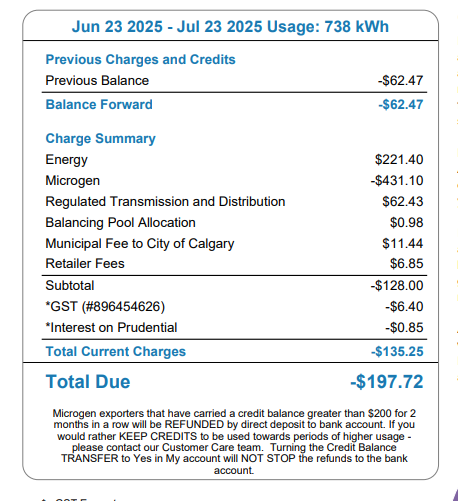
The bill above illustrates the impact Micro Generation has on your bill during high production months.
Before Solar: $318.43/Month
After Solar: -$9.09
In June they used 738kWh of energy but exported enough to earn $431.10 in microgen credits. These credits roll into winter, cutting year round electricity costs and speeding up your solar ROI.

High Vs. Low Rates: How It Works
Many Alberta Homeowners take advantage of seasonal rate strategies. If you don't know what these are read below:
Summer (High Rate):
When your system is producing the most energy, switching to a higher energy rate allows you to earn more credits for the electricity you are exporting.
Winter (Low Rate):
When solar production drops and you rely more on the grid, switching to a lower rate helps reduce your electricity costs.
This strategy of switching your energy rates allows you to maximize the value you get from your solar system in Alberta, all year long.
Programs like Solar Club Alberta are designed to help homeowners with solar take advantage of these seasonal rate changes.
By allowing you to switch between high and low rates throughout the year, Solar Club helps you:
• Earn more from your excess summer production
• Reduce costs during lower production months
• Get more overall value from your solar investment
If you want to see how these rates work in more detail, you can explore current Solar Club options through Orizon Utilities.
Alberta uses a net billing system, not traditional net metering. With net billing, homeowners receive credits based on the electricity rate attached to their plan when they export excess solar energy to the grid. In many other provinces, net metering uses a fixed 1:1 credit system instead. Alberta's model allows solar homeowners to take advantage of seasonal rate strategies like Solar Club programs to maximize your savings.
Most Alberta homeowners switch to a higher rate during the spring and summer months when their solar system produces more electricity than their home consumes. They typically return to a lower rate in the fall or winter when production decreases and grid usage increases. The ideal timing depends on your system's production and your household energy usage patterns.

Seasonal Flexibility
Switching between high and low rates allows homeowners to adapt their strategy throughout the year.
Better Summer Value
High export rates can help maximize the value of excess solar production during peak sunlight months.
Lower Winter Costs
Lower import rates help reduce electricity costs when solar production naturally decreases.
Long-Term Savings
Net billing helps homeowners offset utility costs and improve the long term return on their solar investment.
More energy awareness
Understanding your production and usage patterns can help you make smarter energy decisions year-round.

Subscribe to our newsletter and keep in touch with us

Why to sign up for a newsletter
Open

